-
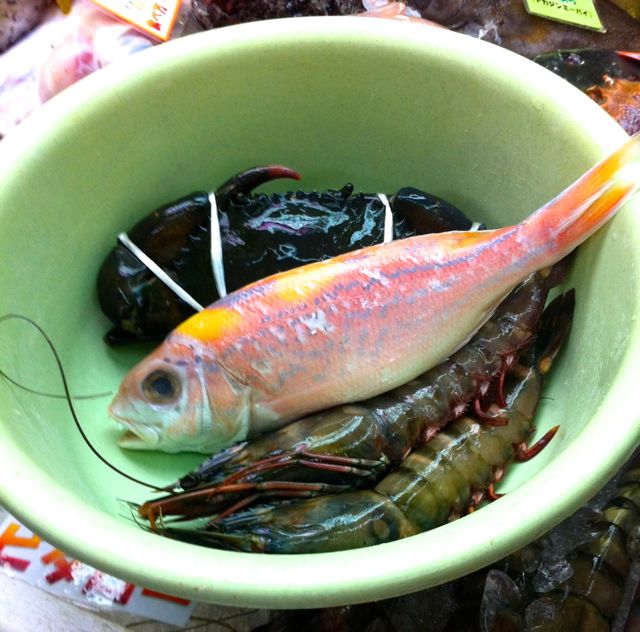
Ordering seafood at Makishi market in Okinawa
My sister and I are in Naha, the capital of Okinawa, a string of islands in the south of Japan. We are at Makishi Public Market in the town centre. We are looking to buy fresh seafood as we have read that the restaurants upstairs will cook it for you. We wander through the stalls,…
-
Getting nude in Hakone
My friend Ange and I were in Hakone, one hour train ride from bustling Toks. Hakone is in a volcanically active national park, surrounded by mountains. The temperature drops, the crowd disappears and the restaurants literally close at 7pm. Tokyo-ians come to escape the city life. International visitors come for the best views of Mount…
-
Porn karaoke in Osaka
My friend Ange and I were in Osaka for our last night in Japan. In the previous ten days, we had eaten our body weight in sashimi, bought a ton of Japanese novelty rubbish which forced me to host a Japan themed party on my return, went to the sumo and bathed nude in a…
-
Lost, hungry and cold at the Tsukiji fish market
The Tsukiji fish market features on many “must-do” lists for Tokyo. I might be missing something here but I found the fish market, unlike the rest of Japan, to be somewhat underwhelming. NOTE: I did not go at 5am to see the tuna auction because there was no guarantee that you would get in. There…
-
How to spend your yen
Shopping is a national sport in Japan, especially in the capital of Tokyo. If you can’t buy it in Toks, it probably doesn’t exist. So what should you buy? Here are my top five: ¥100 novelty items. There are thousands of ¥100 shops all over Japan. They sell household goods and stationery. Each item is…
-
So many temples, so little time
Kyoto has thousands of temples and shrines including 17 UNESCO world heritage sites. According to the very handsome young man at the capsule hotel, all of them is the “most beautiful.” Unless you are a temple buff, you’re unlikely to see them all. Here are my top three: Kinkaku-ji is the distinctively gold temple surrounded…
-
Staying in a ryokan
A ryokan is a traditional Japanese inn. They’re typically floored with tatami mats and equipped with sliding doors. They have rollout futons rather than beds. A high end ryokan would be made exclusively of organic materials such as wood, grass, bamboo and stone. Rooms would come with private gardens and bathtubs filled with water from…
-
Subscribe
Subscribed
Already have a WordPress.com account? Log in now.
 Lucille Wong